

Ask most people who invented pizza and you’ll get the same answer: a guy named Raffaele Esposito, who whipped one up in 1889 to impress the Queen of Italy. Great story. Mostly wrong.
Short answer: pizza wasn’t invented in one single moment by one chef. It evolved over centuries in Naples, and the «official inventor» story is a myth that got attached to something that already existed — mostly for marketing reasons. And weirdly, the same thing happened again a few decades later, on the other side of the Atlantic.
It starts with the Romans, kind of
Long before anyone called it pizza, ancient Romans were already eating flatbread topped with olive oil, herbs, garlic, and sometimes cheese — a dish called panis focacius. Sound familiar? It should: that name is basically the ancestor of «focaccia,» which people in parts of Italy still eat today in a form not wildly different from the Roman original.
That’s not pizza yet, though. It’s just the very distant, cheese-and-bread-shaped great-great-grandparent of it. The actual word «pizza» shows up in written texts as far back as the year 997 AD, referring to a simple flatbread meal eaten mostly by the lower classes for centuries afterward.
The real origin: poor neighborhoods in 18th-century Naples
The pizza we’d actually recognize today started coming together in Naples in the late 1700s and early 1800s — and it wasn’t invented by royalty or fancy chefs. It came from the city’s poorer neighborhoods, where flatbread topped with tomato became a cheap, fast street food.
That tomato part matters more than it sounds. Tomatoes arrived in Italy from the Americas in the 1500s, and for a long time, wealthier Italians genuinely believed they were poisonous or at best «peasant food,» and avoided them entirely. It was the working class of Naples — the people with the least to lose and the least access to fancier ingredients — who casually started putting tomatoes on flatbread anyway. Turns out, the food snobs of the 1700s missed out.
By 1807, Naples already had over 50 registered pizzerias. This wasn’t a novelty dish being unveiled to nobility — it was already a full-blown local food scene, decades before the story you’ve probably heard.
So where does the queen come in?
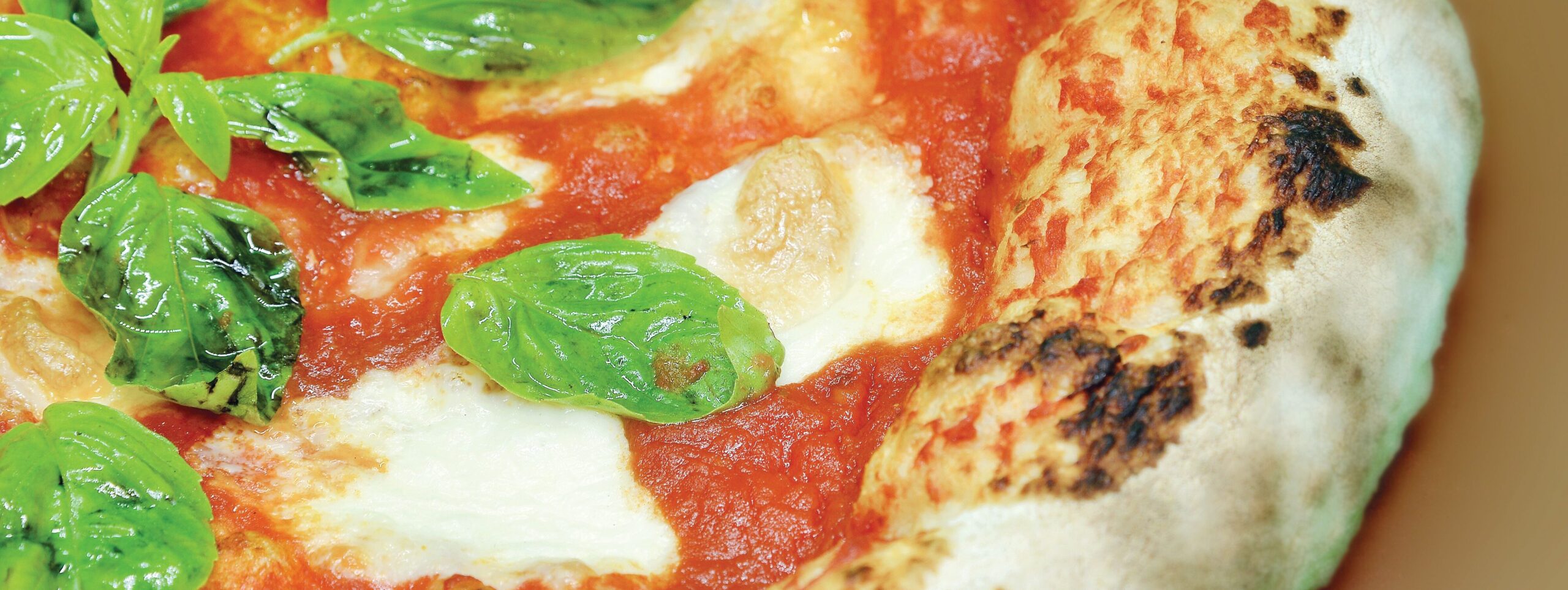
Here’s the popular legend: in 1889, chef Raffaele Esposito supposedly created a brand-new pizza for a visit from Queen Margherita of Savoy, topping it with tomato, mozzarella, and basil to match the colors of the Italian flag. She loved it, he named it after her, and «pizza Margherita» was born.
Cute story. The problem: food historians have found written descriptions of nearly identical tomato-mozzarella-basil pizza in Naples going back to at least the 1830s and 1840s — decades before the queen ever showed up. One account from 1849 even describes mozzarella arranged in a flower pattern over the tomato and basil, which may be the actual origin of the «Margherita» name (margherita is also the Italian word for daisy).
Esposito almost certainly didn’t invent that flavor combination. He just served it to the right person at the right time, and a good story did the rest. There’s even a letter, supposedly from the royal household, thanking Esposito for the pizzas he made — but historians have pointed out that the pizzeria’s own account of the visit has shifted over the years, which is exactly what you’d expect from a legend that was polished up because it was good for business, not because it was strictly accurate.
Pizza crosses the Atlantic — and gets its own myth
Here’s the part almost nobody brings up: the exact same pattern happened again in America, just a few decades later.
The popular story says Gennaro Lombardi, an Italian immigrant, opened the first pizzeria in the United States — Lombardi’s, in New York’s Little Italy — in 1905, single-handedly kicking off America’s entire pizza obsession. It’s a great immigrant-success story, complete with a still-operating restaurant you can visit today.
Except: research into immigration records revealed that Lombardi only arrived in the U.S. in late 1904, at age 17, officially listed as a «laborer.» If he was involved with the shop at all in 1905, historians now think he was almost certainly an employee, not the owner who built the business from scratch. On top of that, other pizza vendors in New York were reportedly selling pizza even earlier — the word «pizza» itself shows up in a Boston newspaper as early as 1903.
So the «solo inventor» pattern repeats itself almost exactly: a real, gradual, working-class food tradition gets flattened into a tidy story about one clever guy, because tidy stories are easier to sell and remember than «a lot of poor immigrants slowly built this over time.»
Myth or fact?
Myth: Raffaele Esposito invented pizza — or even the Margherita specifically — in 1889. Also myth: that Gennaro Lombardi single-handedly launched American pizza in 1905 as its founding father.
Fact: pizza evolved gradually among working-class Neapolitans decades before either «origin story,» tomato-topped versions matching the Margherita combo already existed before the royal visit, and pizza was already being sold in the U.S. before Lombardi’s official opening date. Both «founding myths» are really marketing stories that got attached, after the fact, to food that ordinary people had already been making and eating for years.
Sources consulted: historical accounts of Naples pizzeria records (1796–1849); food history research on the origins of Neapolitan pizza; Pizzeria Brandi historical archives; immigration and historical records relating to Gennaro Lombardi and Lombardi’s Pizzeria, New York.