

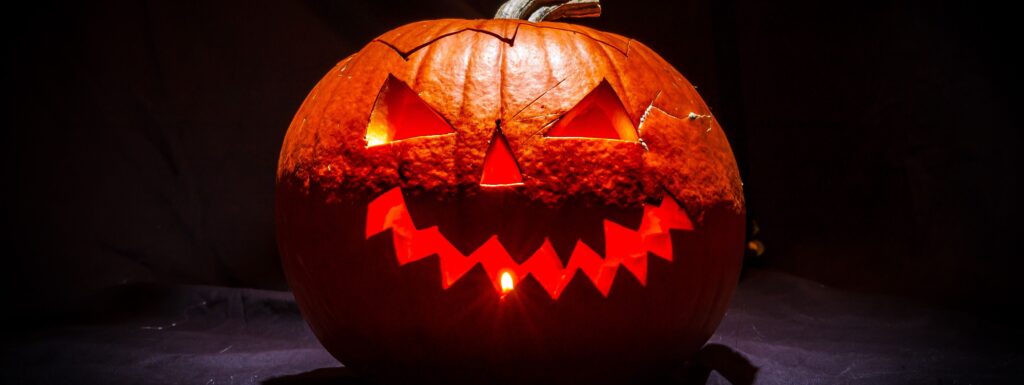
You’ve carved one. You’ve probably cut your thumb doing it. But did you ever pause mid-scoop, elbow-deep in pumpkin guts, and wonder who the heck «Jack» is, and why his lantern ended up on your porch?
Short answer: the name comes from an Irish folktale about a guy called Stingy Jack. And here’s the plot twist: the original jack-o’-lanterns weren’t pumpkins. They were turnips. Yes, turnips. Try hollowing one out with a spoon and you’ll understand why everyone switched.
Meet Stingy Jack, the man who got rejected by heaven AND hell
According to the legend, Stingy Jack was a miserly drunk (some tellings make him a blacksmith) who invited the Devil to have a drink with him. True to his name, Jack didn’t want to pay, so he talked the Devil into turning himself into a coin to cover the bill. Bold move.
It gets worse for the Devil. In most versions, Jack tricks him not once but twice. When Jack finally dies, God won’t let such a trickster into heaven, and the Devil, who had promised not to claim Jack’s soul, can’t take him either. So Jack is stuck wandering the earth forever, with nowhere to go. The Devil takes pity on him and tosses him a burning ember from hell, which Jack tucks inside a hollowed-out turnip to light his way.
People started calling him «Jack of the Lantern.» Eventually that got squashed into «jack-o’-lantern.» (In Irish it’s Seán na Gealaí, which sounds a lot cooler, honestly.)
And did you know the first ones were root vegetables?
Ireland didn’t have pumpkins. What it had, after harvest, was a ton of turnips, mangelwurzels (a type of giant beet) and swedes. So that’s what people carved. They cut scary faces into them, put a light inside, and set them in windows or near doors to scare off Jack and any other restless spirits wandering around on Halloween night. The custom is tied to Samhain, the Celtic festival that marks the end of summer, and it spread from Ireland to Scotland and England.
So how did pumpkins take over?
Immigrants. Irish and Scottish families brought the custom to the United States in the 1800s and found something they hadn’t had back home: pumpkins, a fruit native to North America. They were cheaper, bigger, and far easier to carve and hollow out than a rock-hard turnip. It was not a difficult decision, and the pumpkin has been the star of Halloween ever since.
Plot twist: Stingy Jack isn’t real
He’s a character from folklore, not a documented historical person, so if you were hoping for a drunk blacksmith with a paper trail, sorry.
What’s more, the story is younger than people assume. Halloween’s roots go back over 2,000 years to Samhain, and the jack-o’-lantern usually gets pinned on that ancient Celtic festival. But according to History.com, the Stingy Jack legend first appeared in print in the 19th century. (One Irish-language source dates the folktale to the 18th century instead.) Either way, it’s centuries after the Celts. The carved vegetables and the legend ended up attached to the same holiday, but the «ancient Celtic ghost story» version is a bit of a stretch.
The other theory: spooky floating lights
There’s a competing explanation for the name that has nothing to do with turnips. A «jack-o’-lantern» was also an old name for a will-o’-the-wisp, those mysterious flickering lights people reported seeing in swamps, bogs and woods at night. Sometimes they had natural causes, and sometimes (according to History.com) they were mischievous kids with lanterns.
History.com notes that the Stingy Jack story likely drew on that older idea of a wandering light, which suggests the legend may have been built around the name rather than the other way around. Folklore loves a good retroactive explanation.
The 30-second version (for your friends at the Halloween party)
So here’s what to drop into the conversation while everyone’s scooping seeds:
- The name comes from «Jack of the Lantern», a trickster from Irish folklore who fooled the Devil and got stuck wandering with a glowing ember.
- The first lanterns were carved from turnips, beets and swedes, not pumpkins.
- Pumpkins took over in North America because they were bigger, cheaper and way less painful to hollow out.
- Jack himself is a folktale character, not a historical figure, and his story shows up in print much later than the ancient Celts.
- «Jack-o’-lantern» was also a nickname for those eerie floating swamp lights, so the legend and the name may have grown up together.
Next time someone says «it’s just a pumpkin,» you know what to answer. Now you know who Jack is, and why he deserves a little respect (and a candle).
Myth or fact?
Myth: that jack-o’-lanterns have always been pumpkins, or that Stingy Jack was a real person from an ancient Celtic tale.
Fact: the first jack-o’-lanterns were carved turnips, beets and other root vegetables in Ireland and Scotland. The name comes from the folktale of «Jack of the Lantern,» a character from folklore rather than history, whose story first shows up in print only in the 18th or 19th century and may have borrowed from the older «wandering light» idea. Pumpkins only took over once immigrants reached North America and realized they were much, much easier to carve.
Sources consulted: History.com, «How Jack O’Lanterns Originated in Irish Myth»; Britannica, «Why Do We Carve Pumpkins at Halloween?»; Farmers’ Almanac, «Why We Carve Pumpkins on Halloween: The Strange History of Jack-o’-Lanterns»; Let’s Learn Irish, «The History of the Jack-O-Lantern»; PBS, «The History of the Jack-O-Lantern»; Euclid Public Library, «Jack-o’-lanterns.»